
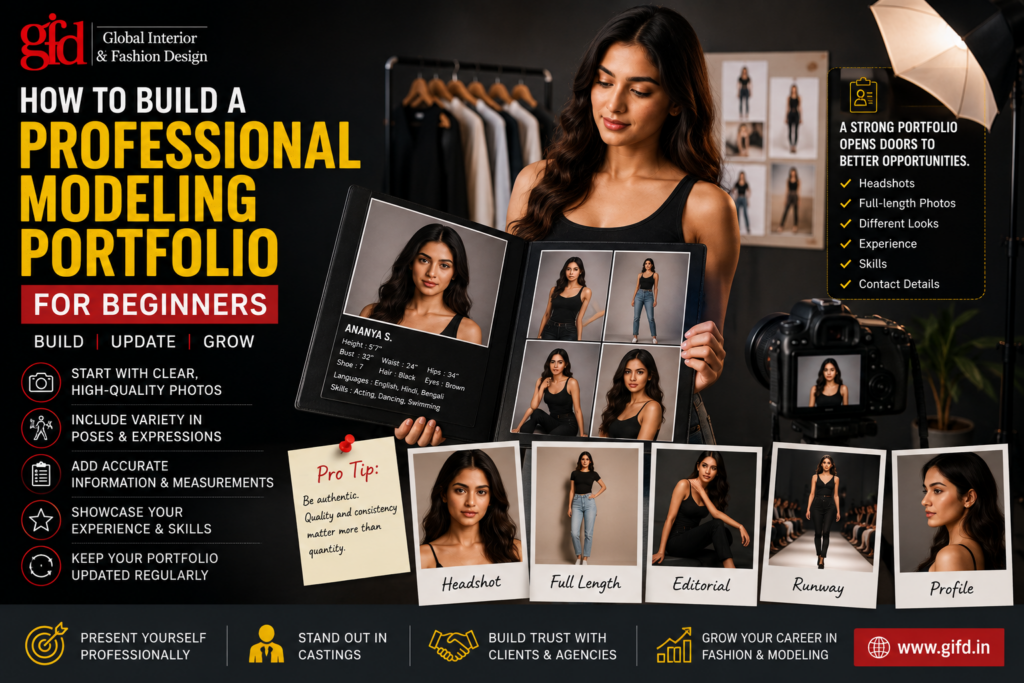
How to Build a Professional Modeling Portfolio for Beginners
A modeling portfolio is one of the most useful tools for introducing yourself to potential clients, photographers, casting professionals, and creative teams.
If you are a beginner, you may not have extensive professional experience yet. That is perfectly fine. You can start with a simple portfolio and gradually improve it as you gain experience.
What Is a Modeling Portfolio?
A modeling portfolio is a collection of photographs and professional information that represents you as a model.
Depending on your experience and the type of modeling you want to pursue, your portfolio may include:
- Headshots
- Full-length photographs
- Fashion photographs
- Different poses
- Relevant experience
- Skills
- Measurements where appropriate
- Contact information
The portfolio should give someone a quick understanding of your appearance, presentation, and modeling potential.
Start With Clear Photographs
Photography is the most important part of a modeling portfolio.
Start with a few high-quality photographs rather than adding a large number of average images.
Useful photographs may include:
- Clear headshot
- Full-length photograph
- Side or profile photograph
- Natural expression
- Fashion or editorial image
Avoid excessive filters and editing. Your portfolio should provide an authentic representation of your current appearance.
Choose Different Poses and Expressions
A strong beginner portfolio should demonstrate versatility.
Include photographs showing different:
- Poses
- Expressions
- Angles
- Outfits
- Styling approaches
However, avoid adding too many photographs that look almost identical. Every image should serve a purpose.
Include Your Basic Information
Your portfolio can include relevant professional information such as:
- Name
- Contact details
- Location
- Modeling experience
- Relevant skills
- Languages
- Training
Only include accurate information. You should never add fake projects, experience, or professional associations to make your portfolio appear stronger.
Mention Relevant Skills
Additional skills can be useful for certain modeling opportunities.
Depending on your genuine abilities, you may mention:
- Dancing
- Acting
- Singing
- Sports
- Fitness
- Languages
- Stage performance
- Presentation skills
Relevant skills can help you become suitable for projects that require more than traditional modeling.
Add Experience as You Progress
You do not need to wait until you have extensive experience before creating a portfolio.
Start with your strongest photographs and basic information. As you participate in suitable photoshoots, fashion events, projects, or other opportunities, you can gradually add relevant experience.
This makes your portfolio a continuously developing professional profile.
Consider Creating a Digital Portfolio
A digital portfolio is convenient because it can be shared easily with potential clients and casting teams.
You can organise your:
- Photographs
- Profile information
- Resume
- Experience
- Videos
- Contact details
Keep the layout simple and make sure all photographs and links work properly.
Keep Your Portfolio Updated
Your appearance and experience can change over time, so your portfolio should also be updated regularly.
Replace outdated photographs when necessary and add new relevant work as you gain experience.
An updated portfolio is more useful than a collection of old photographs.
Avoid Common Portfolio Mistakes
Beginners should avoid:
- Excessive photo editing
- Too many similar images
- Low-quality photographs
- False experience
- Unnecessary information
- Outdated photographs
- Broken video links
- Unprofessional contact details
A clean and authentic portfolio is generally more effective than an overloaded one.
Develop Skills Alongside Your Portfolio
A portfolio can show what you look like, but developing your actual modeling skills is equally important.
Practical training can help you work on posing, runway walking, expressions, grooming, camera awareness, confidence, and professional presentation.
As you improve these skills, you can also create better portfolio material.
Final Thoughts
Building a modeling portfolio is a gradual process. Start with clear photographs, accurate information, and a simple professional presentation. As you gain training and experience, continue improving and updating your portfolio.
For beginners who want structured guidance, a modeling course in Kolkata can help develop practical skills while preparing for auditions, photoshoots, and other modeling opportunities.