
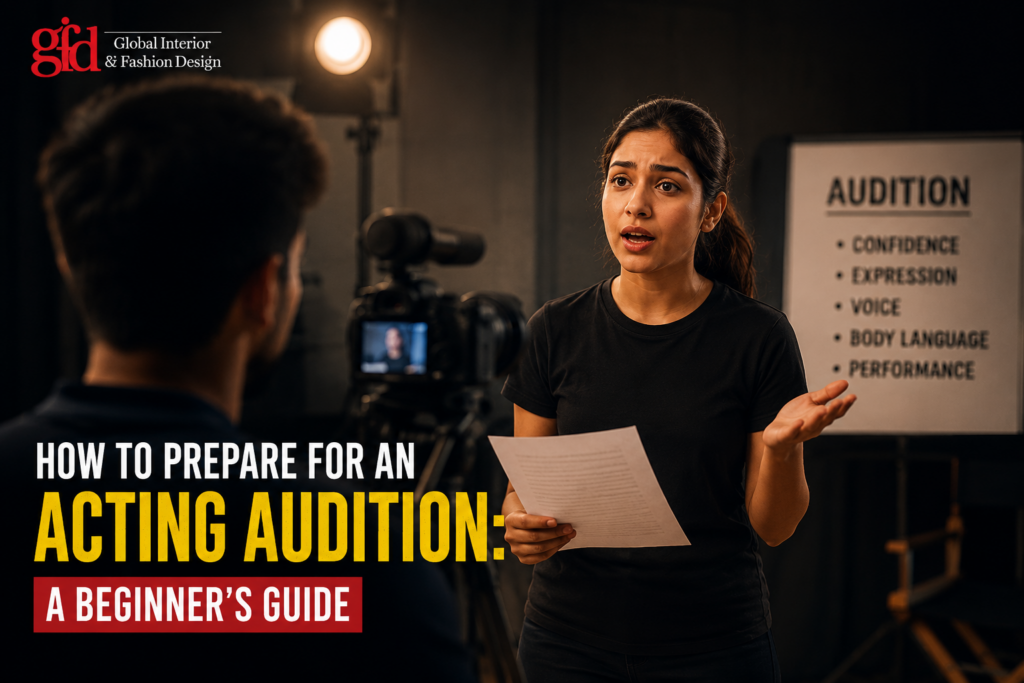
How to Prepare for an Acting Audition: A Beginner’s Guide
An audition can be exciting and intimidating at the same time, especially when you are attending one for the first time. Good preparation can help you feel more confident and allow you to concentrate on your performance instead of your nervousness.
Whether you are preparing for a theatre production, short film, advertisement, television project, or other performance opportunity, the following steps can help you approach an audition professionally.
Understand the Audition Requirements
Before preparing your performance, carefully read the audition information. Check whether you need to prepare a particular scene, monologue, dialogue, song, introduction, or other material.
Also note the required duration, language, dress requirements, location, reporting time, and documents or materials you may need.
Being prepared with the basic requirements can prevent unnecessary stress on audition day.
Read and Understand Your Script
If you receive a script or scene, don’t immediately start memorising it. First understand what the character is trying to communicate.
Ask yourself:
- Who is the character?
- What does the character want?
- Who is the character speaking to?
- What happened before the scene?
- What emotions are involved?
- How does the character change during the scene?
Understanding the situation can help you deliver the dialogue more naturally.
Practice Your Dialogue
Once you understand the scene, begin practicing your lines. Avoid focusing only on memorisation. Pay attention to meaning, pauses, emotions, voice, and reactions.
Practice aloud and record yourself occasionally. Watching your own performance can help you identify areas where your delivery or expressions can be improved.
Work on Your Voice and Body Language
Your voice and body language communicate a great deal during an audition.
Practice:
- Clear pronunciation
- Appropriate voice volume
- Voice modulation
- Natural gestures
- Facial expressions
- Posture
- Controlled movement
The goal is not to make every movement dramatic. Instead, your performance should match the character and situation.
Prepare a Monologue
If the audition requires a monologue, select material that suits your age, personality, language ability, and performance level.
Choose a piece that allows you to demonstrate your acting ability rather than selecting something simply because it is famous.
Learn the context of the monologue and understand the emotions behind the words.
Practice Without Overacting
One common mistake beginners make is trying too hard to show emotions. Bigger expressions do not always create a better performance.
Try to make your reactions believable. Listen to the imaginary character, understand the situation, and respond naturally.
Record a Practice Audition
A simple phone recording can be an excellent practice tool.
Set up your phone at an appropriate height and perform your scene as though you were in an actual audition. Review the recording and check your expressions, voice, posture, eye line, and overall presentation.
Repeat the exercise until your performance feels comfortable without becoming mechanical.
Dress Appropriately
Choose simple and comfortable clothing unless the audition specifically asks for a particular costume.
Your clothing should allow the casting team to focus on your face and performance. Avoid unnecessary accessories or extremely distracting outfits.
Stay Calm on Audition Day
Nervousness is normal. Arrive with enough time to settle down and review your material.
Take a few slow breaths before entering the audition space. Listen carefully to instructions and be willing to take direction.
If the casting team asks you to perform the scene differently, treat it as an opportunity to demonstrate your adaptability.
Learn From Every Audition
You may not get selected every time, and that is normal in acting. Each audition can provide experience and help you understand how to improve.
After the audition, think about what went well and what you could improve next time.
Final Thoughts
Successful audition preparation is not about trying to become someone else. It is about understanding the character, preparing properly, and presenting your performance with confidence and authenticity. Acting Classes in Kolkata can help beginners develop these skills through regular practice and guided performance exercises.
For beginners who want to develop their acting skills systematically, structured practical training can provide a strong foundation before entering auditions and performance opportunities. An Acting Institute in Kolkata can provide the right learning environment to build confidence, improve performance techniques, and prepare for different acting opportunities.